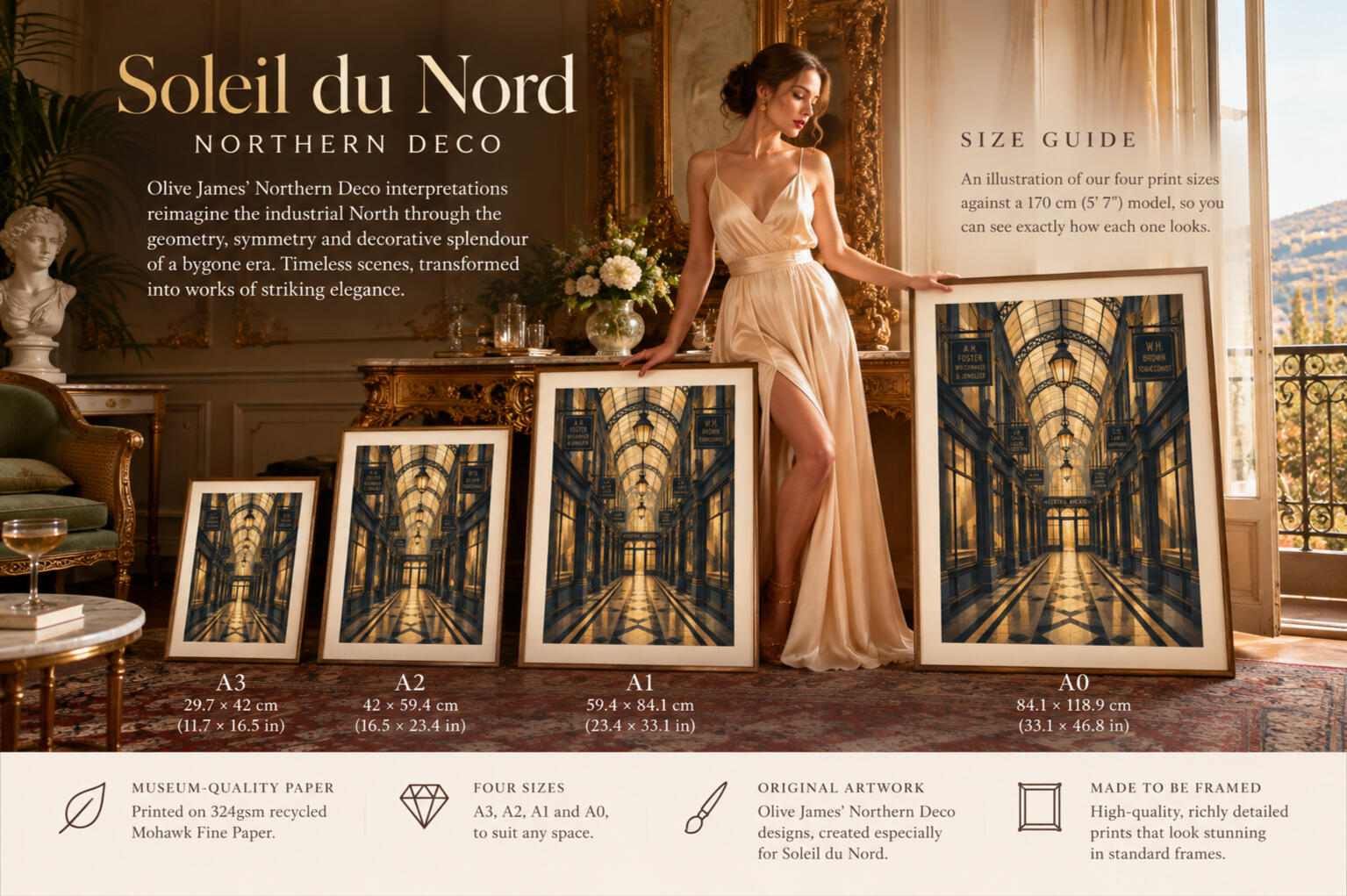
Northern Deco
Artist | Olive James
Olive James (1924–1976)Olive James was a British artist and designer whose distinctive interpretation of Northern industrial life became known as 'Northern Deco', a style combining the geometric elegance of Art Deco with the architecture, industry and everyday character of Lancashire.Born in Wigan in 1924, James developed an early fascination with the visual rhythms of her hometown: the repeating chimneys of terraced streets, the monumental brickwork of railway viaducts, the bold lettering of public houses and the unexpected beauty of ordinary commercial buildings.Her work was profoundly influenced by the photographs of Louis Ballantyne, whose studies of Wigan between 1957 and 1966 revealed a quiet dignity in subjects generally overlooked by the artistic establishment. James admired his compositions but rejected his sombre realism, believing that the same streets and buildings could be celebrated through colour, symmetry and graphic invention.In 1968, she began producing the series that would define her career. Working with carefully controlled palettes, simplified architectural forms and striking geometric arrangements, James transformed familiar Northern scenes into images of unexpected glamour and sophistication. Public houses, railway bridges, shops and industrial streets acquired the visual confidence of grand European travel posters.Although her subjects occasionally overlapped with Ballantyne's, her interpretation was unmistakably her own. Where he recorded the world as he found it, James presented it as she believed it deserved to be seen.She continued developing Northern Deco until her death in 1976, leaving behind a remarkable body of work that challenged conventional ideas of beauty, place and artistic importance.Today, her designs are celebrated for their originality, their affectionate understanding of working-class Lancashire and their insistence that elegance was never the exclusive property of fashionable cities.Northern Deco was not an escape from the North. It was a celebration of it.
Acquiring Your CollectionWe invite you to explore the gallery at your leisure and discover the works that speak to you.Once you have chosen your favourite, simply select your preferred print size using one of the four buttons below. You can then choose your artwork and quantities before completing your purchase securely through Stripe.Each Northern Deco is reproduced on beautiful 324gsm museum-quality paper and supplied unframed in A3, A2, A1 or A0.All prices include careful packaging and delivery directly to your door, with no additional postage charges.A little piece of the North, wherever you call home.
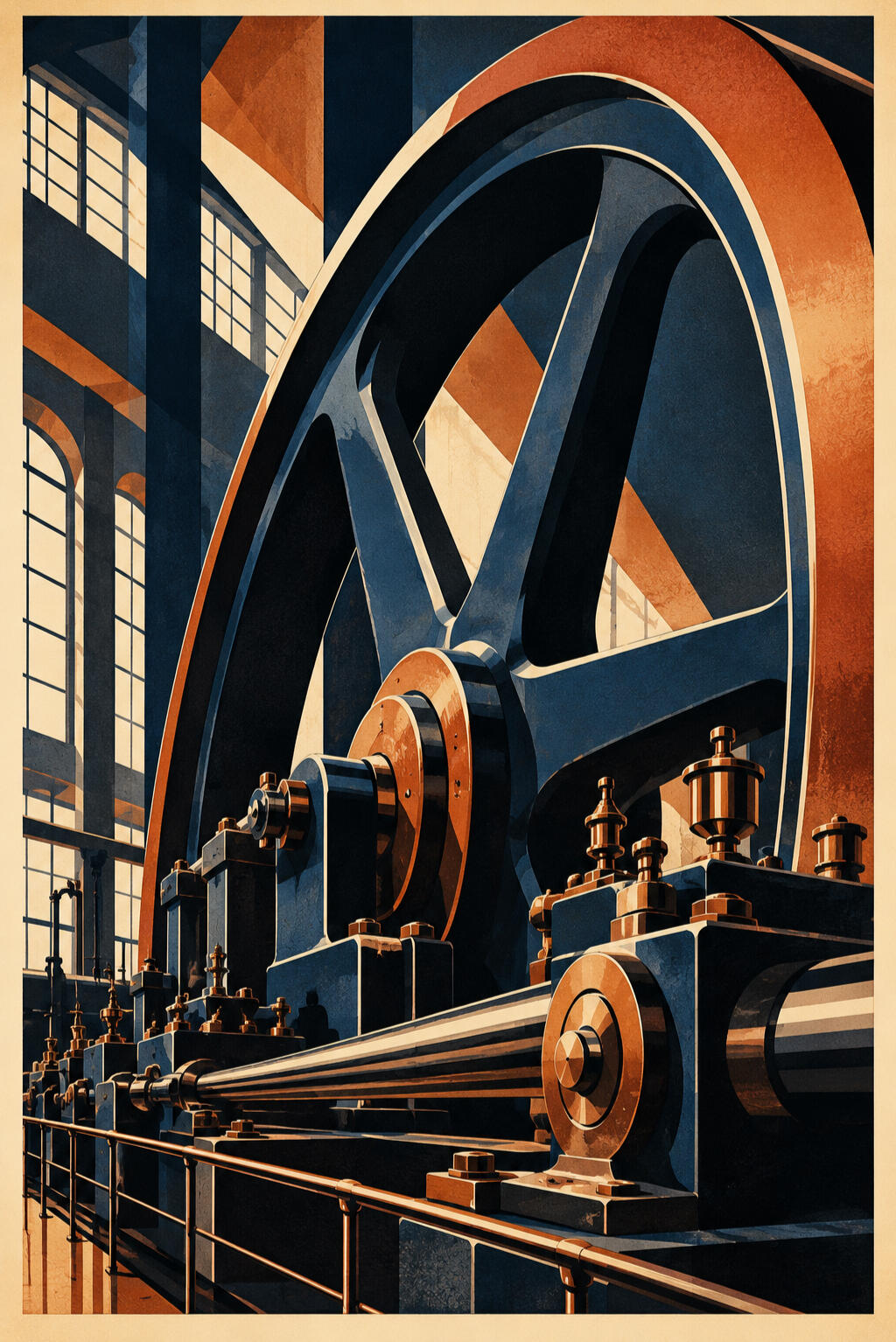
The Machine (1975)
The beauty of industry
Olive James celebrates the engineering heritage of industrial Lancashire through the monumental form of a factory flywheel. Its immense circular structure, powerful connecting rods and intricate mechanical components dominate the composition, transforming a functional piece of machinery into an extraordinary study of strength, precision and architectural beauty.Unlike her familiar depictions of terraced streets, public houses and railway arches, The Machine takes the machinery of industry itself as its subject.James finds a remarkable elegance in the enormous wheel and its surrounding mechanisms, their carefully engineered forms creating a dramatic interplay of sweeping curves, rigid horizontals and repeating geometric patterns.Her distinctive Northern Deco palette is at its most confident here. Deep midnight blue contrasts with rich terracotta and burnished gold, while shafts of light illuminate the polished metal surfaces and towering factory windows.The exaggerated scale gives the flywheel an almost cathedral-like presence, suggesting that the great industrial machines of Lancashire were monuments every bit as impressive as the celebrated architecture of Europe's fashionable capitals.
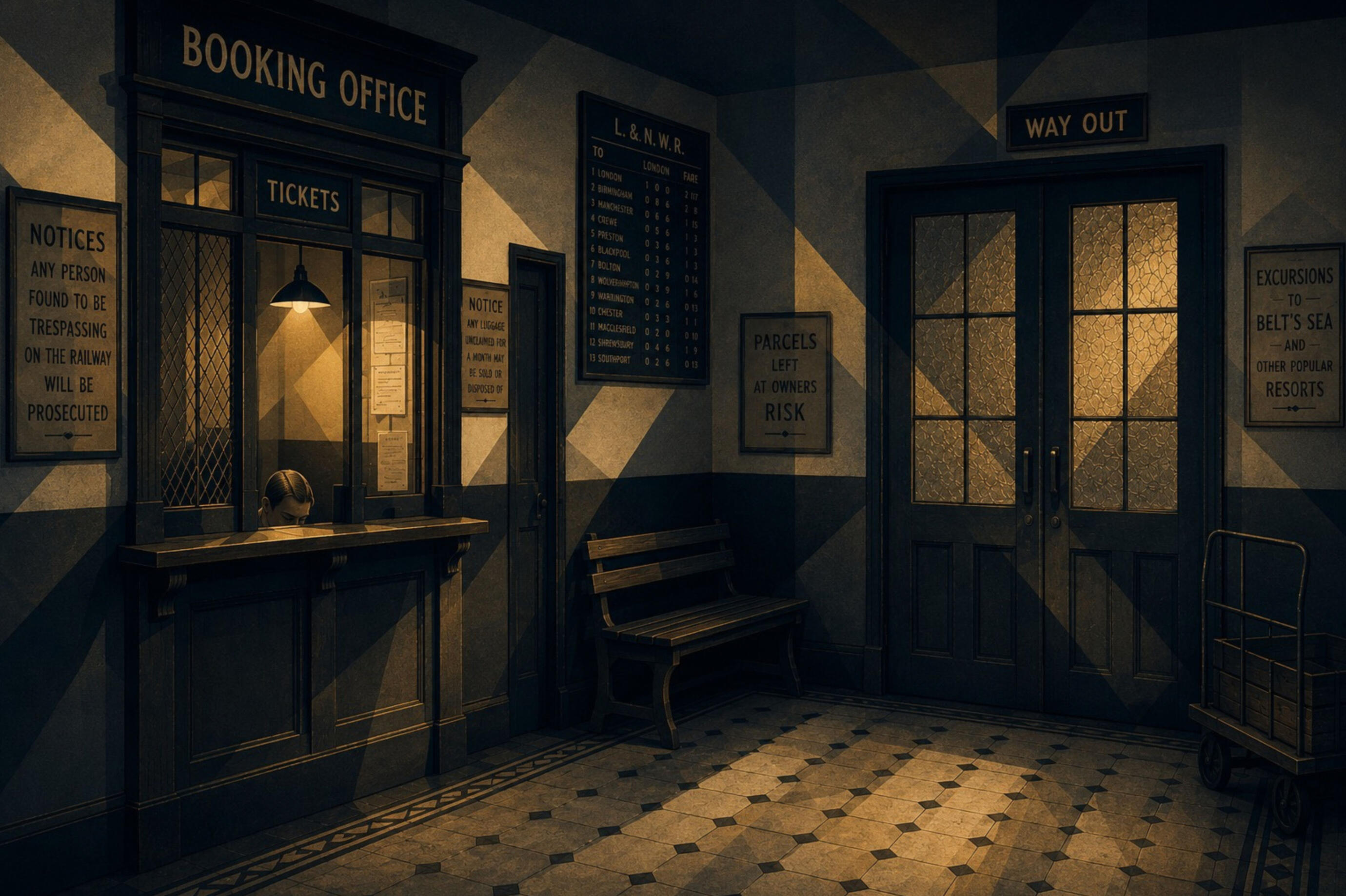
The Station (1972)
The promise of departure
Olive James transforms a modest Wigan railway booking hall into an elegant study of anticipation and possibility.Behind the ticket window, a solitary clerk attends to her duties, while destination boards, railway notices and an empty wooden bench evoke the familiar rituals of travel.The composition draws upon the geometric precision of Northern Deco, with bold diagonal shadows crossing the tiled floor and warm amber light illuminating the dark woodwork and glazed doors.Even the practical lettering and railway signage become part of James's carefully ordered design.
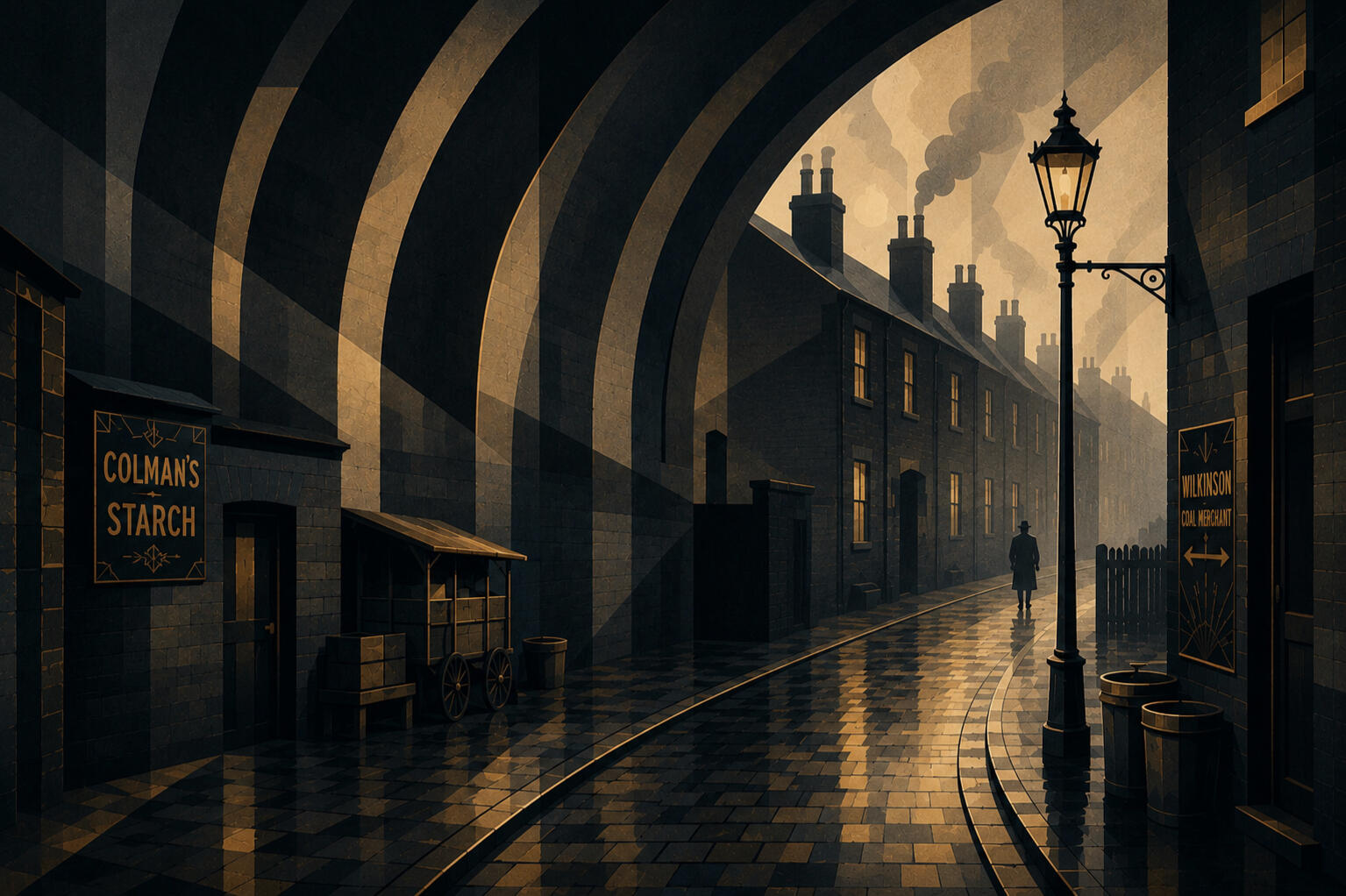
The Viaduct (1968)
The grandeur of scale
Beneath the towering arches of a railway viaduct, a narrow Wigan street curves past rows of terraced houses towards the distant industrial skyline. A solitary figure walks through the quiet neighbourhood, dwarfed by the immense Victorian brickwork overhead.Drawing upon Louis Ballantyne's earlier photograph, Olive James transforms the scene into a dramatic study of architectural scale and geometric precision. The sweeping arches dominate the composition, while shafts of golden light illuminate the cobbled street and the familiar rooftops beyond.Her characteristic palette of amber, charcoal and muted gold gives the industrial landscape an almost monumental elegance. The Viaduct celebrates the extraordinary engineering achievements of Northern England and the ordinary communities that lived in their shadow, capturing the essence of James's distinctive Northern Deco vision.
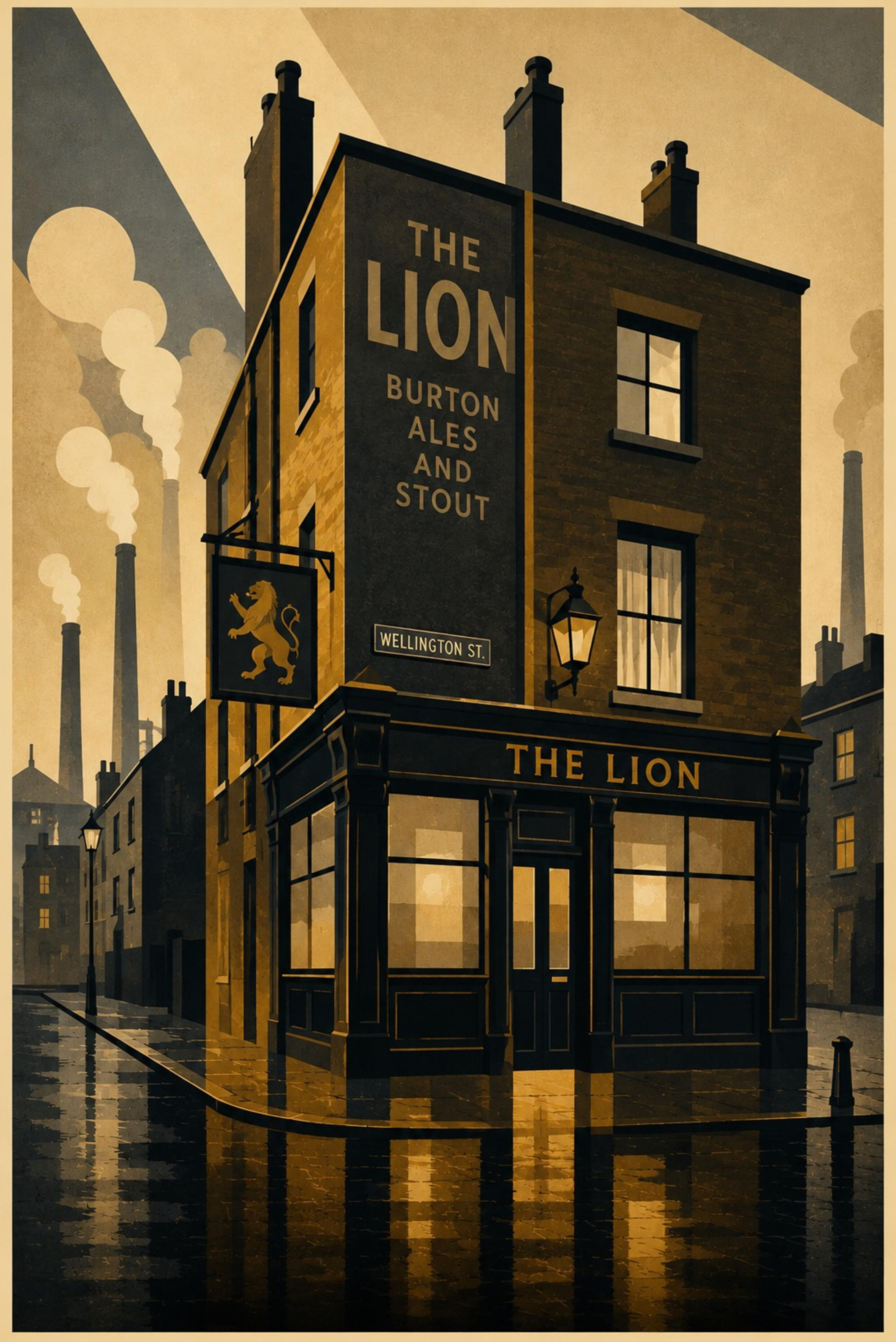
The Lion (1974)
Pride of the manor
Olive James presents The Lion on Wellington Street as a commanding symbol of Wigan's industrial heritage.Its imposing brick façade, traditional pub signage and glowing windows stand proudly against a skyline of smoking factory chimneys.Inspired by Louis Ballantyne's earlier photograph, James transforms the familiar corner public house through bold architectural lines, dramatic perspective and a rich palette of amber, gold and charcoal.The rain-soaked streets become shimmering geometric patterns, lending the building an almost monumental presence.The Lion celebrates the enduring importance of the Northern public house, not merely as a place to drink, but as a centre of friendship, conversation and community.In James's hands, a modest Wigan pub acquires the grandeur of a celebrated city landmark.
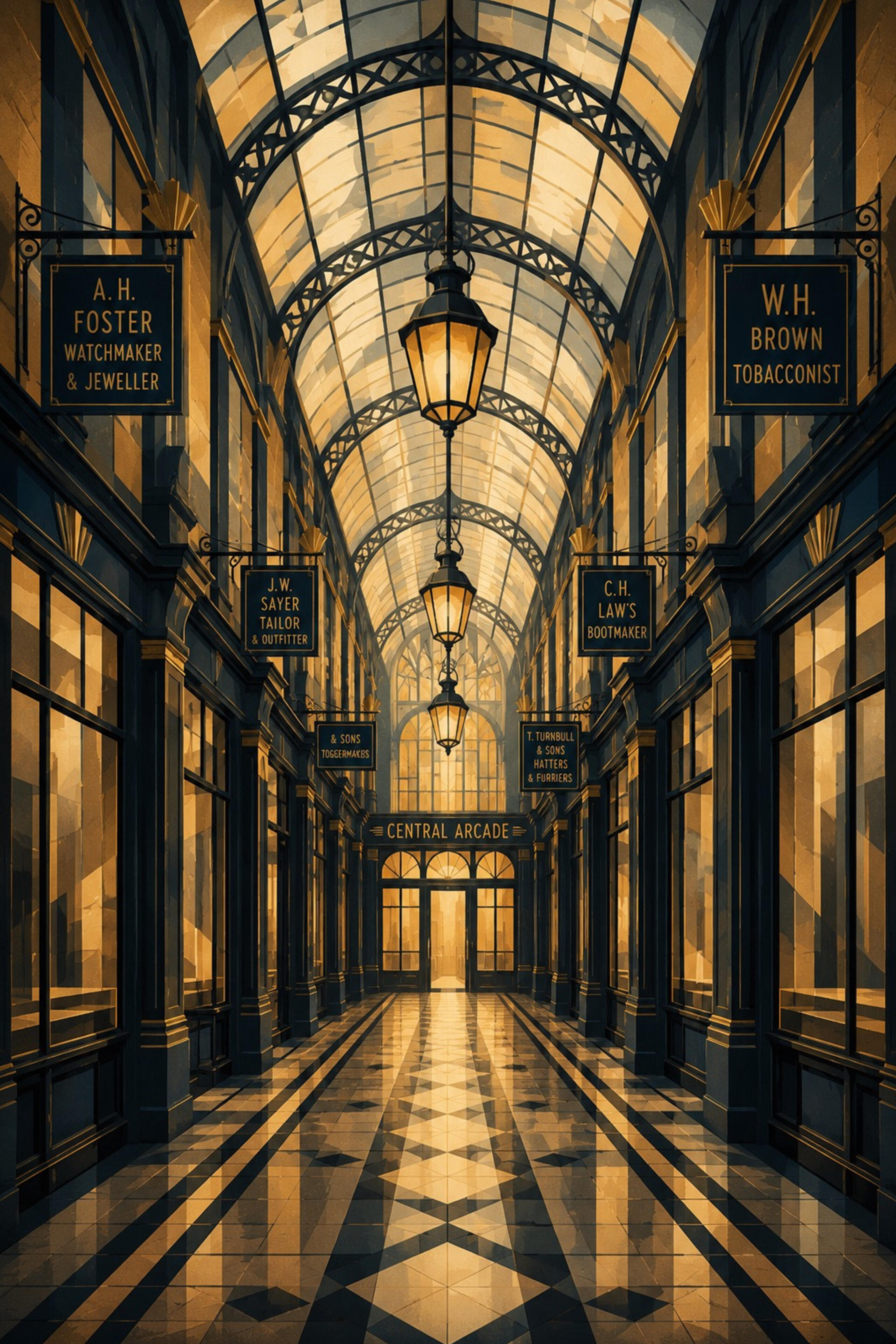
The Arcade (1972)
The elegance of everyday life
In The Arcade, Olive James transforms Wigan's Central Arcade into a magnificent celebration of architectural elegance and independent commerce.Beneath its soaring glass roof, the familiar establishments of watchmakers, jewellers, tailors and tobacconists acquire an almost metropolitan grandeur.Drawing inspiration from Louis Ballantyne's earlier photograph of the same arcade, James replaces his subdued monochrome realism with a radiant palette of amber, gold and midnight blue.The repeating iron arches, illuminated lanterns and geometric floor tiles create a striking interplay of symmetry, perspective and light.Her characteristic Northern Deco style is particularly evident in the exaggerated architectural proportions and carefully orchestrated patterns. What was once a modest Victorian shopping passage becomes a glittering monument to craftsmanship, enterprise and civic pride.The Arcade exemplifies James's conviction that the ordinary streets and buildings of Lancashire possessed an elegance entirely equal to the celebrated boulevards and galleries of Europe.
Found Something You Love?Select your print and preferred size, then complete your purchase securely through Stripe.
All prices include packaging and delivery to your door.
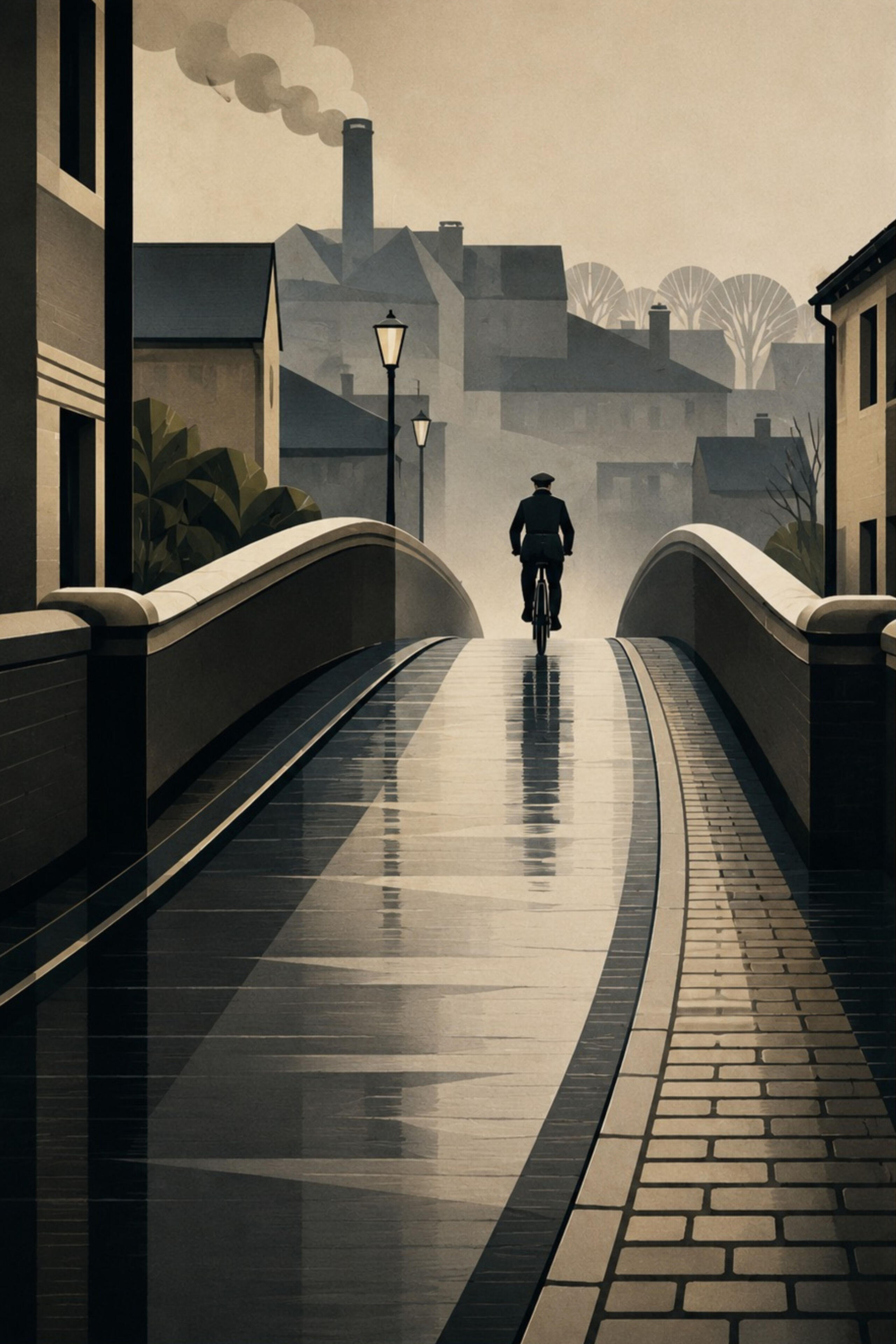
The Bridge (1969)
The road to somewhere
A solitary cyclist crosses a gently arched bridge on the outskirts of Wigan, his silhouette framed against the pale industrial skyline. Beyond him, factory chimneys, modest houses and bare winter trees emerge through the morning haze.Revisiting a subject photographed by Louis Ballantyne, Olive James transforms an unremarkable journey into an elegant study of movement, perspective and architectural form. The sweeping curves of the bridge provide a striking contrast to the angular rooftops and factory buildings beyond.Her restrained palette of warm stone, charcoal and muted gold lends the scene an unexpected sophistication. The wet roadway becomes a polished geometric surface, its reflections drawing the eye towards the lone figure at the centre of the composition.The Bridge embodies the essential character of Northern Deco, finding beauty not in grand monuments or celebrated landmarks, but in the familiar routes and everyday journeys of an industrial town.
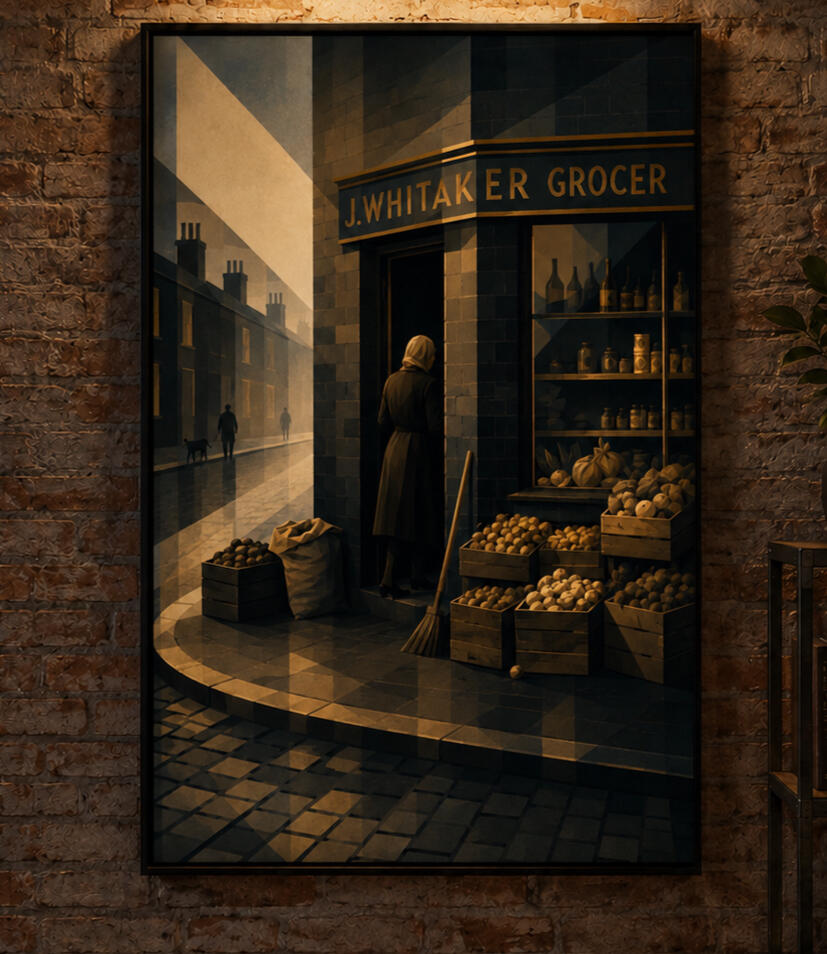
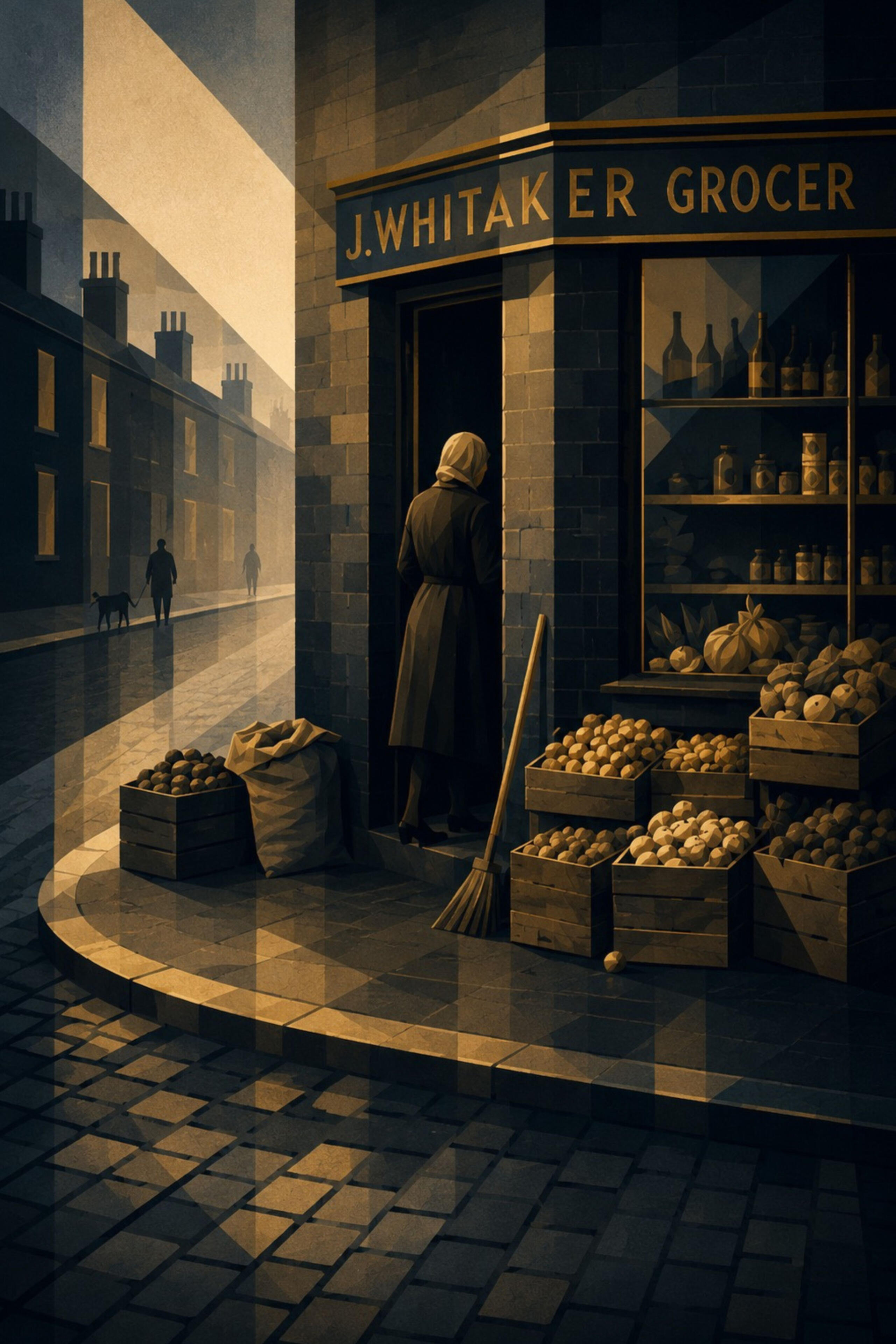
The Corner (1973)
The centre of everything
Inspired by Louis Ballantyne's earlier photograph, James replaces the muted greys of the original with warm golds and deep charcoal. Bold lettering, angular shadows and the sweeping curve of the pavement lend an unexpected grandeur to an otherwise ordinary street corner.
The Steps (1969)
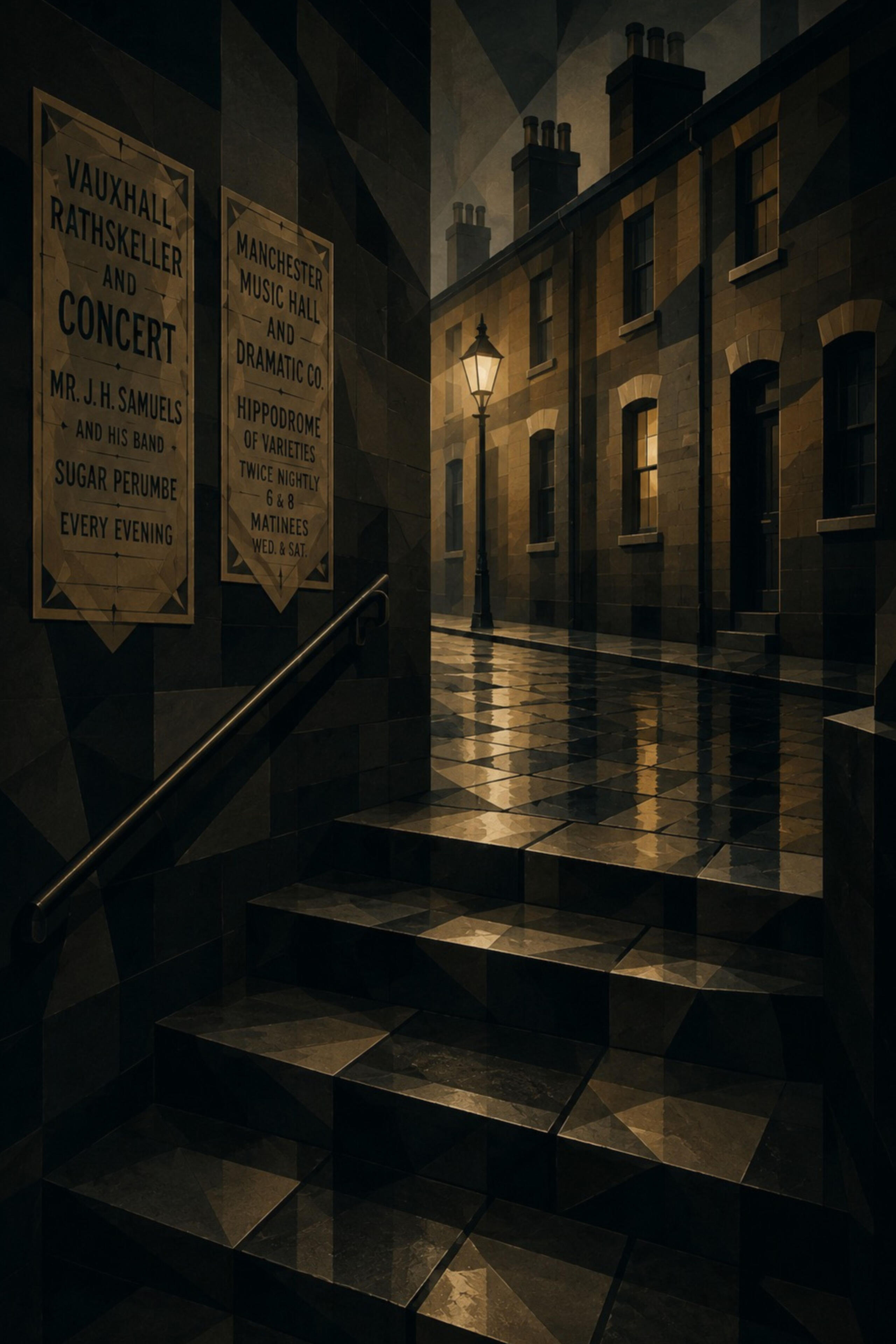
An entrance to another world
A narrow flight of stone steps rises towards a deserted Wigan street, where the warm glow of a solitary gas lamp illuminates the surrounding terraced houses.Faded theatrical advertisements recall an era of music halls, variety performances and popular entertainment.Olive James transforms this unassuming passageway into a dramatic composition of angular shadows, polished surfaces and carefully balanced architectural forms.The steep steps draw the eye towards the illuminated street, while her characteristic palette of amber and charcoal lends the scene an atmosphere of mystery and anticipation.The Steps celebrates the hidden corners of industrial Wigan, where even the most ordinary passage might suggest the promise of something extraordinary.A striking example of Northern Deco, it finds theatrical grandeur in a place most passers-by would scarcely notice.
The Washing (1970)
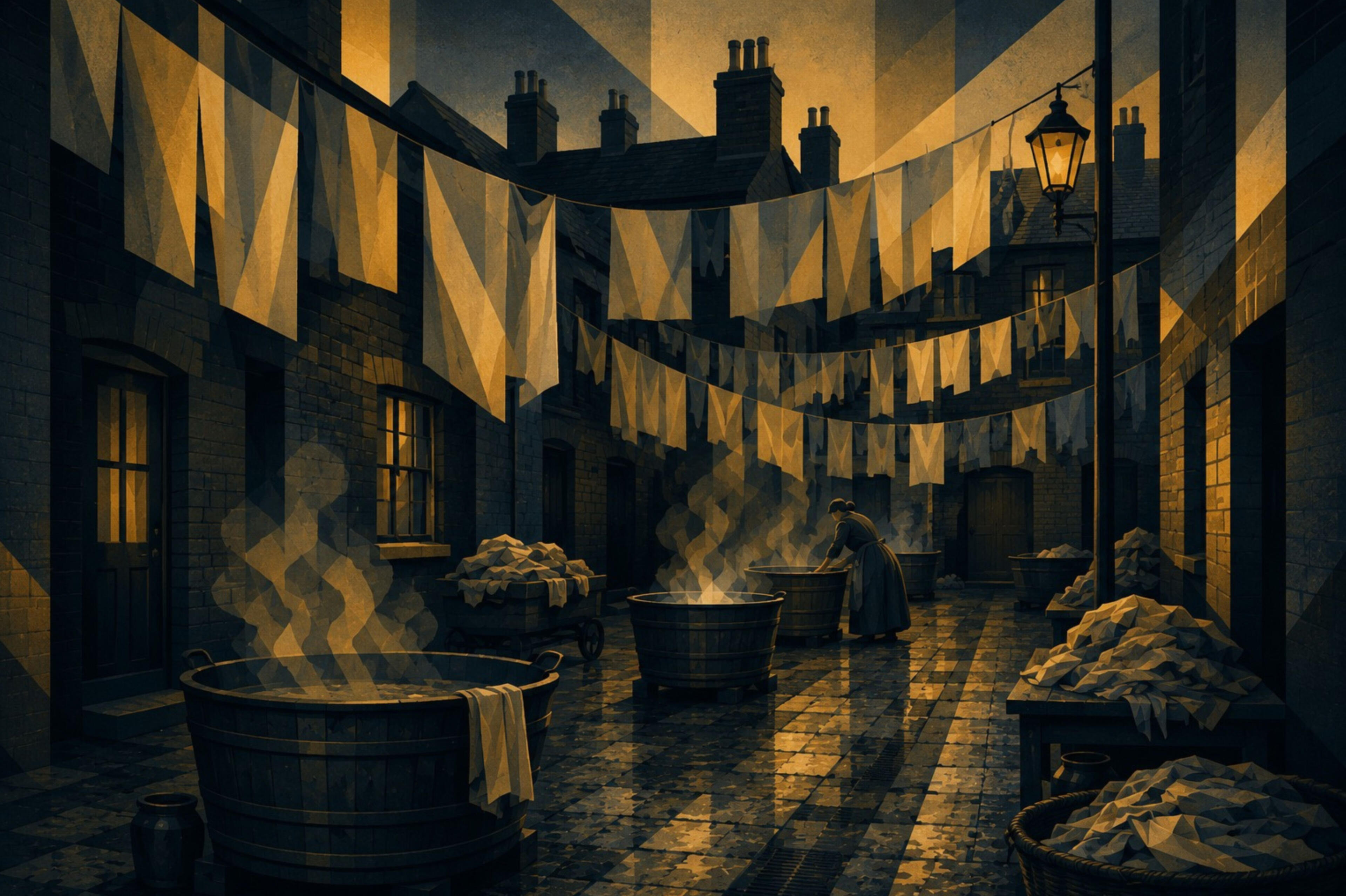
The fabric of working life
In a narrow courtyard enclosed by Wigan's terraced houses, great wooden washtubs stand beneath lines of freshly laundered sheets. A solitary woman tends to her work as clouds of steam rise into the evening air, illuminated by the warm glow of a streetlamp.Returning to a subject previously explored by Louis Ballantyne, Olive James transforms a scene of demanding domestic labour into an extraordinary arrangement of light, colour and geometric form. The hanging linen becomes a succession of angular shapes, while the wet cobblestones reflect the rich amber and charcoal tones of her distinctive palette.The composition is almost architectural in its precision. Lines of washing stretch between the buildings like decorative banners, and the rising steam softens the rigid symmetry of the surrounding brickwork. Yet the woman remains central to the work, a quiet acknowledgement of the labour upon which countless Northern households depended.The Washing demonstrates James's remarkable ability to discover grandeur in the most uncelebrated aspects of everyday life, elevating an ordinary communal washday into a striking expression of Northern Deco.
The Canal (1976)
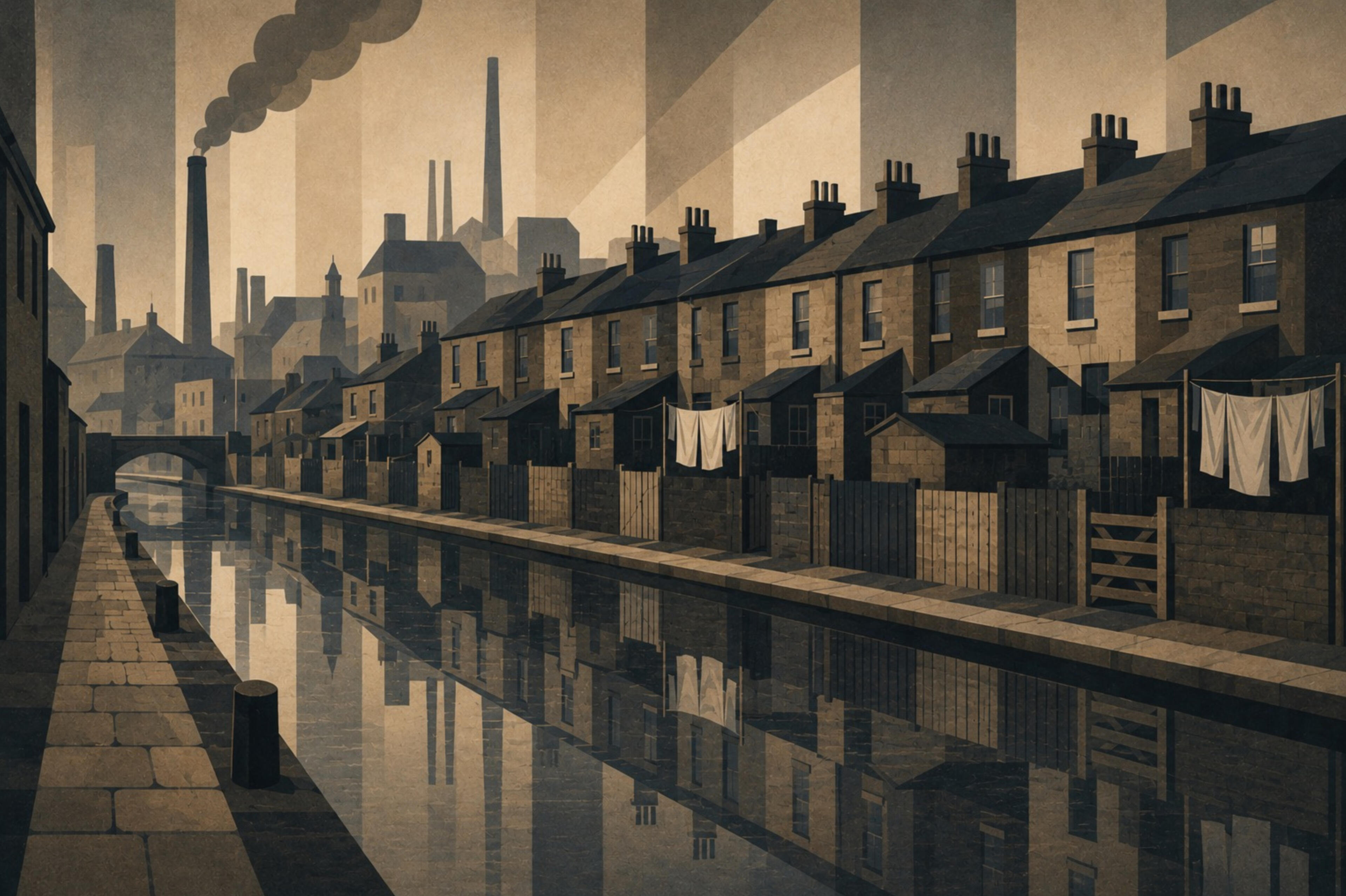
Reflections of an industrial age
Olive James presents a quiet stretch of Wigan's canal as an elegant meeting of industry and domestic life. Rows of terraced houses, washing lines and towering factory chimneys stand beside the still water, their reflections creating a second, almost perfectly ordered landscape.The composition is dominated by strong horizontal lines and repeating geometric forms, softened by a restrained palette of warm stone, muted gold and charcoal. The canal becomes an immense mirror, lending unexpected grandeur to the modest buildings along its banks.The Canal celebrates the waterways that helped shape industrial Lancashire, while acknowledging the communities that grew alongside them. Completed in the final year of James's life, it is a fitting expression of Northern Deco, finding beauty and quiet dignity in the working landscape of Wigan.
Have you chosen your favourite?Select your print and preferred size, then complete your purchase securely through Stripe.
All prices include packaging and delivery to your door.